943 Finchley Rd, London NW11 7PE


Clear Aligners or Braces for Your Smile?
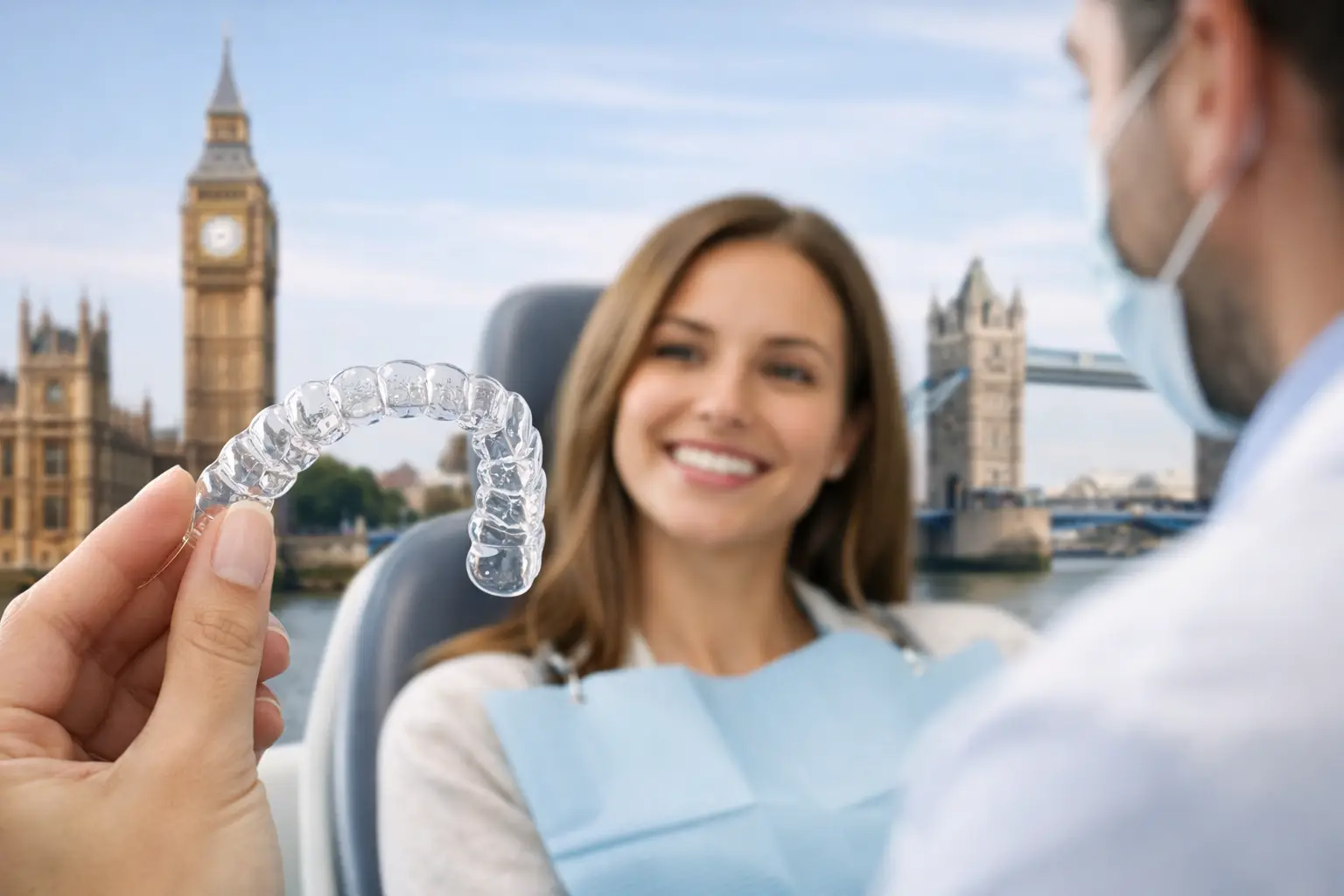
A wedding date, an important presentation or simply the wish to smile without holding back can make the question feel urgent: clear aligners or braces? Both can create a healthier, more balanced smile, but they do not suit every bite, lifestyle or treatment goal in the same way. The best choice is not automatically the least visible option. It is the treatment that can move your teeth safely, predictably and beautifully while fitting realistically into your everyday life.
At Lotus Dental and Aesthetics Clinic in Golders Green, the starting point is always a detailed assessment rather than a one-size-fits-all recommendation. Your teeth, bite, gum health, facial proportions and goals all help determine whether removable aligners or fixed braces will give you the most confident result.
Clear aligners or braces: start with the diagnosis
Orthodontic treatment is about much more than straight front teeth. A smile can look neater while the bite remains unstable, the teeth are difficult to clean or the jaw is placed under unnecessary pressure. A proper consultation considers how your upper and lower teeth meet, the position of tooth roots, crowding, gaps, previous dental work and the health of your gums.
Digital scans, photographs and X-rays allow your clinician to plan each movement in detail. This matters because some movements are straightforward, such as gently closing small spaces or correcting mild crowding. Others are more demanding, including moving severely rotated teeth, correcting a deep bite, opening space for restorations or addressing significant jaw-related bite discrepancies.
Clear aligners and braces can both treat a wide range of cases. The real difference is the level of control required, how consistently the appliance must be worn and which approach gives the clinician the most reliable way to achieve the planned result.
When clear aligners are the right fit
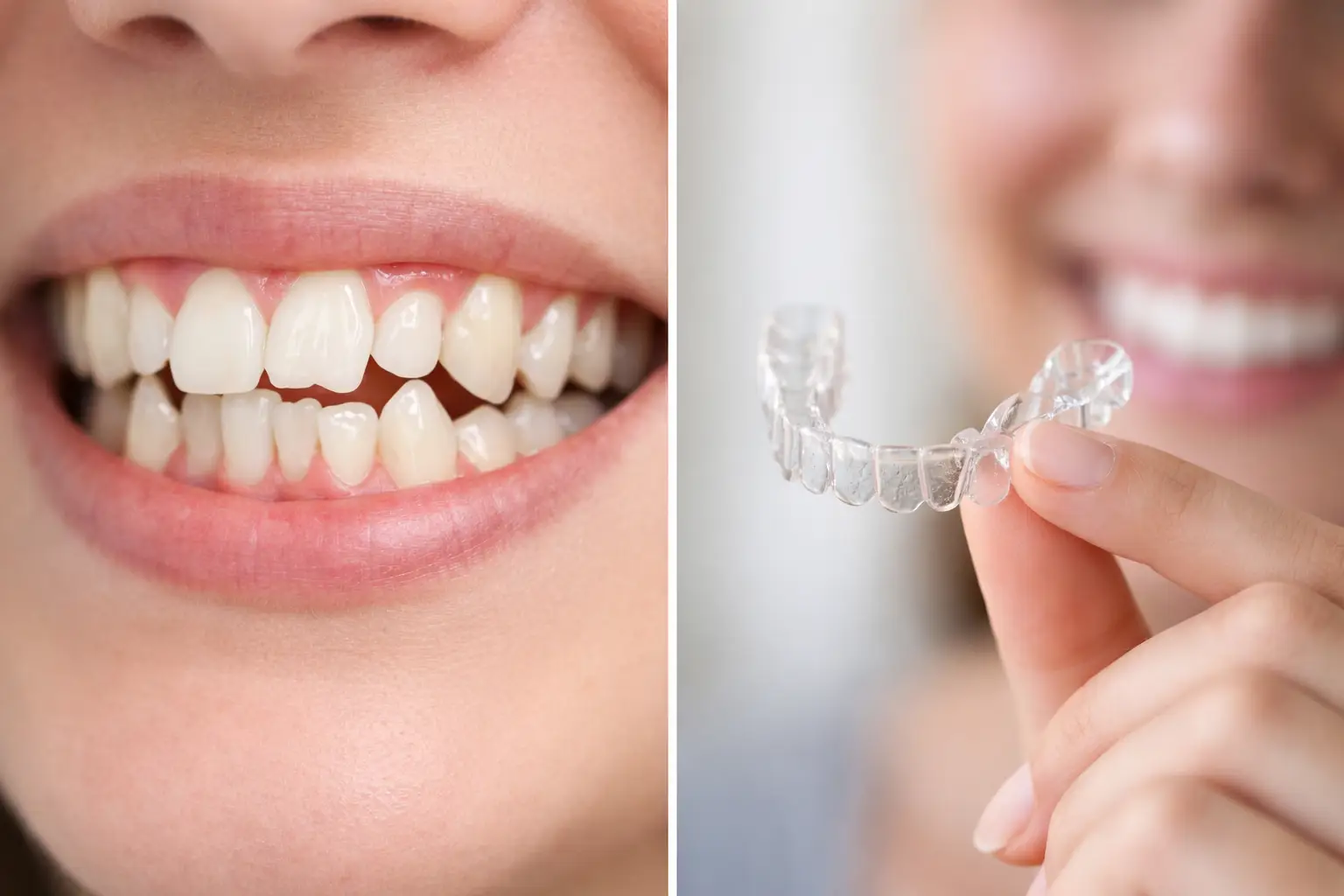
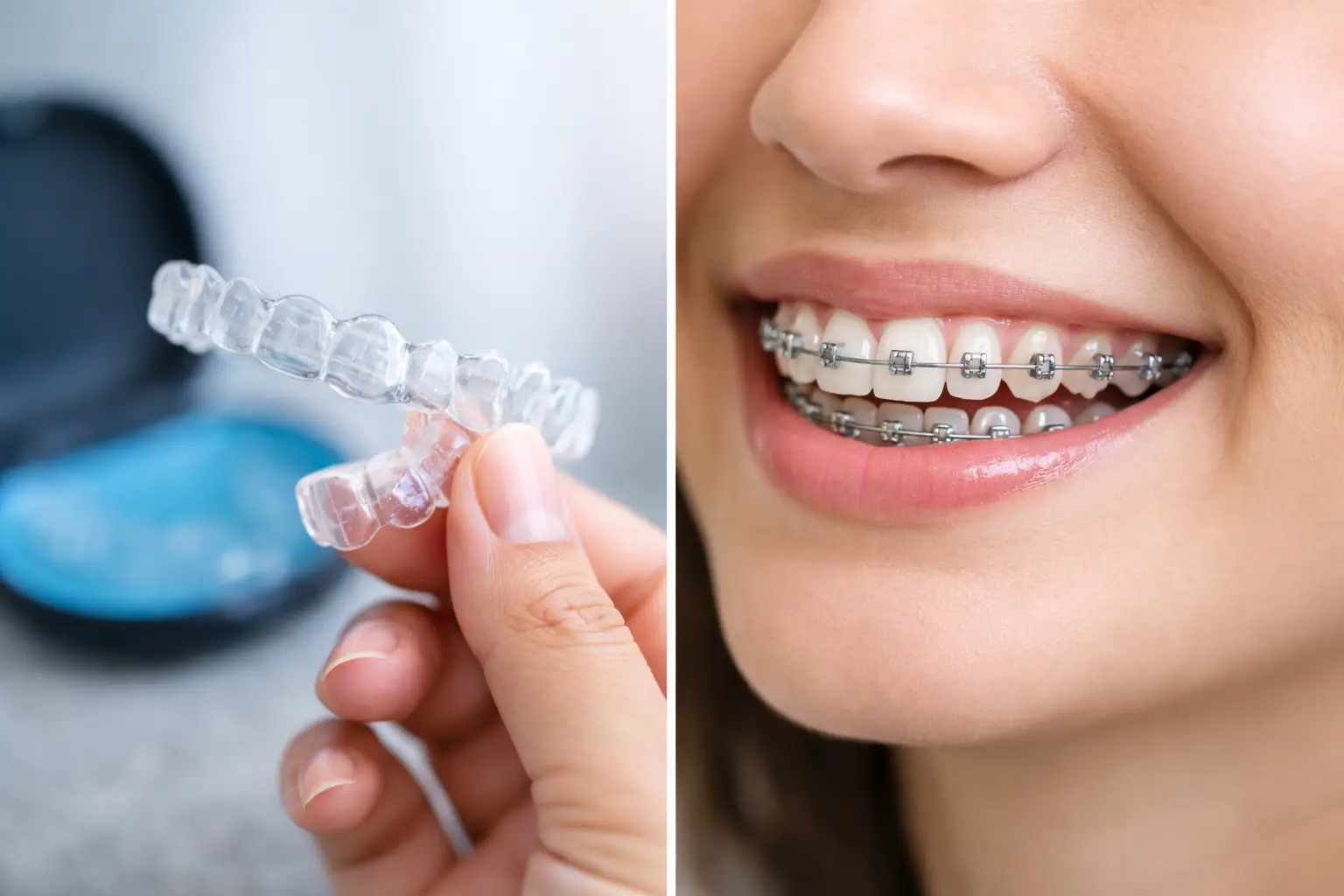
Clear aligners are custom-made, transparent trays that fit closely over your teeth. You progress through a planned series of aligners, each designed to make small, controlled changes. They are popular with adults because they are discreet, removable and compatible with a busy professional or social life.
For many people, the greatest benefit is choice. You can remove aligners for meals, brushing and special occasions, then put them back in straight afterwards. There are no brackets or wires to catch food, and cleaning your teeth is usually simpler than it is with a fixed appliance. This can be particularly appealing if you regularly attend client meetings, speak in public or simply prefer a less noticeable treatment.
Clear aligners can be highly effective for mild to moderate crowding, spacing, relapse after previous orthodontics and many bite concerns. Modern systems may use small tooth-coloured attachments, elastics or carefully planned enamel shaping to improve grip and precision. These additions are normal and often make it possible to treat cases that once would have required braces.
The trade-off is commitment. Aligners generally need to be worn for around 20 to 22 hours each day. They must be removed only for eating, drinking anything other than water, and cleaning. Leaving them out for long periods can slow progress, affect the fit of the next aligner and extend treatment. If you know you are likely to misplace trays, forget to replace them after meals or feel unable to wear them during the day, a fixed solution may be more dependable.
Aligners also require sensible care. Hot drinks can distort the plastic, coloured drinks may stain it, and trays should be cleaned daily. Some patients notice a brief change to their speech when they first begin, although this normally settles as the mouth adapts.
Why appearance is not the only advantage
The visual subtlety of aligners is valuable, but the ability to remove them for thorough brushing and flossing is equally significant. Healthy gums provide the foundation for a successful smile transformation. For patients with busy schedules, aligner reviews can also sometimes be organised efficiently around planned treatment stages, although you should still attend every appointment advised by your clinician.
Treatment is not always completely invisible. Attachments may be visible at close range, and aligners can catch the light in photographs. However, most people find that they are far less noticeable than conventional brackets, especially in day-to-day conversation.
When braces offer greater control
Fixed braces consist of brackets bonded to the teeth and connected by a wire. Because they remain in place throughout treatment, they apply consistent forces around the clock without relying on you to remember to wear them. This makes them an excellent option for teenagers, for adults who prefer not to manage removable trays, and for more complex tooth or bite movements.
Braces can offer exceptional control when teeth need substantial rotation, vertical movement or precise positioning. They are often recommended where there is pronounced crowding, challenging bite correction, impacted teeth or a need to coordinate teeth carefully before implants, veneers or other restorative dentistry. This does not mean aligners cannot manage complex cases, but braces may provide the more predictable route in certain situations.
Modern braces are not limited to highly visible metal brackets. Ceramic braces use tooth-coloured brackets that blend in more naturally with your smile. They remain visible, but they can be a good middle ground for patients who want the consistency of fixed treatment with a more discreet appearance.
The practical compromise is that braces require more attention to cleaning and food choices. Hard, sticky or chewy foods can damage brackets and wires, while plaque can collect more easily around the appliance. You will need to brush carefully around each bracket, use interdental cleaning aids and attend adjustment appointments. Minor tenderness after fitting or tightening is common, and lips or cheeks can take a little time to adjust.
The everyday differences that shape your choice
Comfort is personal. Clear aligners tend to have smooth edges and create gradual pressure as you change to the next tray. Braces can feel more noticeable initially, particularly after adjustments, and may occasionally rub against the inside of your mouth. Orthodontic wax and practical guidance can make this manageable.
Eating is another clear distinction. With aligners, you take the trays out before meals and can enjoy your normal diet, provided you brush before reinserting them. With braces, you eat with the appliance in place and avoid foods that could loosen or break components. Neither approach is difficult once it becomes routine, but your lifestyle should influence the decision.
Treatment time also depends on your starting point and how reliably treatment is followed. A simple aligner case may be completed relatively quickly, while complex corrections with either option can take longer. Aligners occasionally require refinement trays near the end of treatment to perfect small details. Braces may need extra time if a wire breaks or appointments are missed. The most accurate timeline comes after clinical planning, not from an online comparison.
Cost should be assessed as part of the overall treatment plan, not merely as the headline price of an appliance. Fees can reflect case complexity, diagnostics, the number of aligners or adjustments needed, retainers and follow-up care. Asking what is included helps you compare options clearly. Flexible payment plans can make a carefully planned treatment more accessible without compromising on clinical standards.
Your smile goals may involve more than straightening
Orthodontics can create the space and alignment needed for wider cosmetic or restorative work. For example, moving teeth into a healthier position before replacing a missing tooth or refining a worn smile may improve both appearance and long-term function. Equally, if you are considering veneers or bonding, straightening first can sometimes allow for a more conservative result with less alteration to natural tooth structure.
This is where a comprehensive consultation matters. Rather than treating one visible concern in isolation, your clinician can assess the whole smile and discuss what will protect your oral health while delivering the look you want. The aim is not a copy-and-paste smile. It is a result that suits your features, feels comfortable and remains easy to maintain.
Retainers protect the result you worked for
Whether you choose clear aligners or braces, the active treatment is only part of the process. Teeth have a natural tendency to drift, particularly during the first months after straightening. Retainers hold them in their new positions while the surrounding tissues adapt.
Your retention plan may include removable clear retainers, a discreet fixed retainer behind the front teeth, or both. Wearing and caring for retainers as advised is one of the most valuable ways to protect your investment and keep your new smile looking as intended.
If you are torn between discreet aligners and the control of fixed braces, do not try to decide from photographs alone. A calm, detailed orthodontic assessment can show you what each route can genuinely achieve for your teeth. The right treatment should leave you feeling informed before it leaves you smiling with greater confidence.
Talk to the team at Lotus Clinic, Golders Green
See our page on Invisalign at Lotus Clinic for prices and who will treat you, or book a consultation at 943 Finchley Road, London NW11 7PE. Free parking on our driveway.