943 Finchley Rd, London NW11 7PE


Best Treatments for Stained Teeth That Work

A bright smile can change how you feel in photographs, meetings and everyday conversations. But the best treatments for stained teeth are not always the same for every smile. Surface marks from coffee need a different approach from deep, inherited discolouration or a single tooth that has darkened after trauma.
The right treatment begins with understanding why your teeth have changed colour. At a professional dental consultation, your clinician can assess the type of staining, check the health of your teeth and gums, and recommend an option that delivers a natural-looking result without compromising your smile.
Why teeth become stained
Some stains sit on the outside of the enamel. Tea, coffee, red wine, curry, smoking and coloured foods can gradually leave pigment on the tooth surface, particularly where plaque and tartar have built up. These are often the most responsive to professional cleaning and whitening.
Other changes come from within the tooth. Ageing can make enamel thinner, allowing the naturally yellower dentine beneath to show through. Certain medicines taken during tooth development, dental trauma, old fillings and root canal treatment can also create more complex discolouration. In these cases, a whitening toothpaste alone is unlikely to make a meaningful difference.
It is also worth remembering that a healthy smile is not usually paper-white. The aim is a fresher, brighter shade that complements your complexion and looks beautifully believable, rather than an artificial finish.
Best treatments for stained teeth in the clinic
Professional hygiene treatment for surface stains
For many patients, the first step is a professional scale and polish or hygiene appointment. Removing plaque, tartar and surface staining can reveal the natural colour of your teeth and leave your smile feeling noticeably cleaner and smoother.
This is particularly helpful for staining linked to smoking, coffee or tea. It does not alter the internal shade of the tooth, so it is not a substitute for whitening, but it creates a clean foundation before any cosmetic treatment. If bleeding gums, sensitivity or gum disease are present, these concerns should be addressed first.
Dentist-supervised teeth whitening
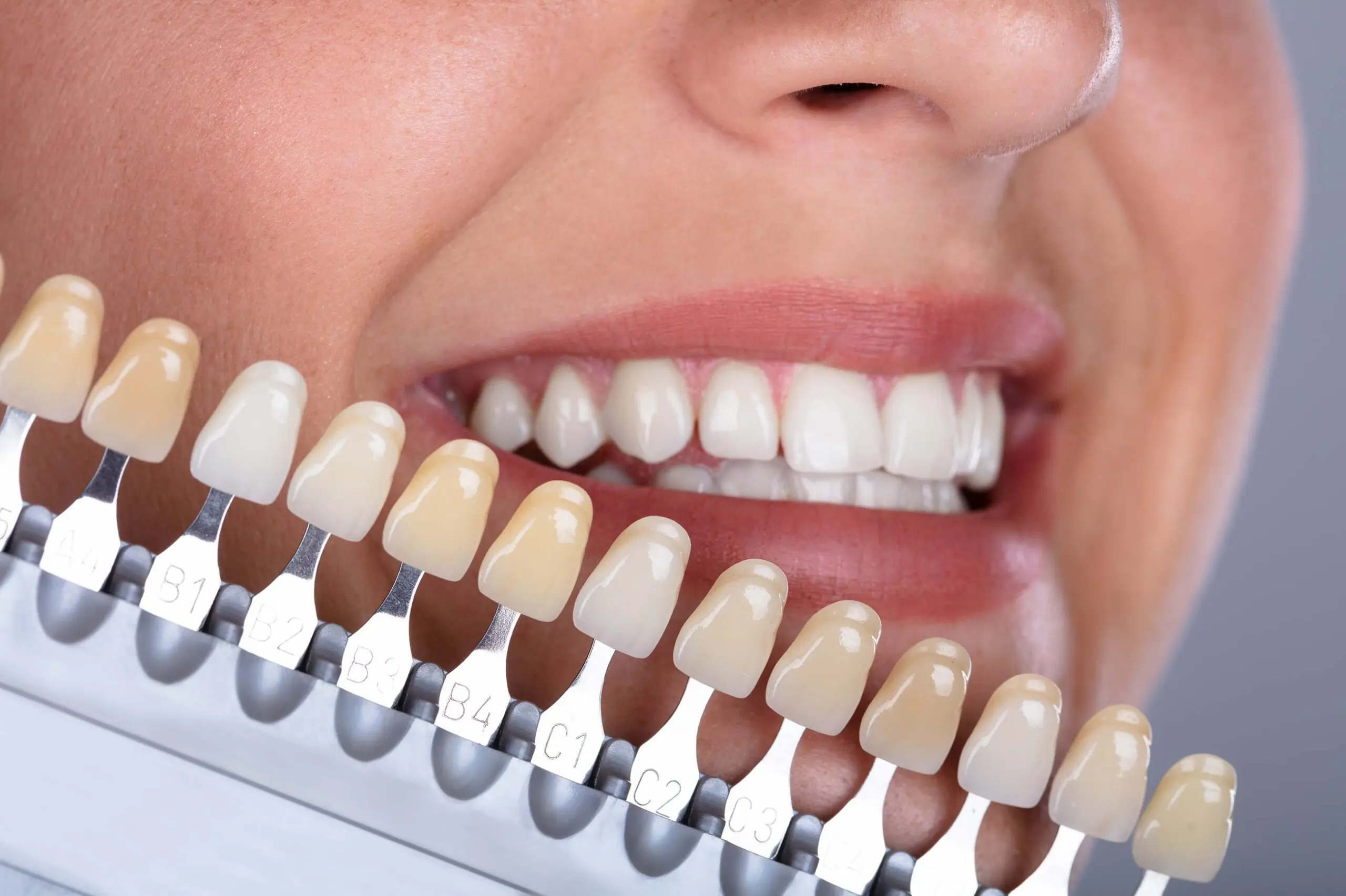
Professional whitening is often the most conservative and effective choice for general yellowing or widespread staining. It uses clinically approved whitening gel, normally applied with custom-made trays at home over a prescribed period, or in some cases combined with an in-clinic treatment.
The benefit of professional supervision is not simply a stronger-looking result. Your dentist can check that whitening is suitable, protect your gums, guide you on sensitivity and help you choose a shade that still looks natural. Custom trays also ensure the gel reaches the teeth evenly, which is difficult to achieve with one-size-fits-all products.
Results vary according to the original tooth shade, enamel condition and lifestyle. Yellow-toned teeth generally respond very well, while grey or blue-grey staining can be less predictable. Whitening also will not change the colour of crowns, veneers, composite bonding or fillings. If you have visible dental work, a smile plan may include replacing it after whitening so the shades match.
Temporary sensitivity is the most common side effect. It is usually manageable by adjusting the schedule, using desensitising products recommended by your dentist, or taking short breaks between applications. Whitening should never be used to mask toothache, untreated decay or gum problems.
Internal whitening for one dark tooth
When a single tooth becomes darker after a root canal or previous injury, internal whitening may be an excellent option. Your dentist places whitening material inside the tooth, allowing the colour to lighten from within before sealing it again.
This treatment requires careful assessment, including X-rays where appropriate, because the cause of discolouration matters. Done correctly, it can improve a dark front tooth without immediately moving to more extensive cosmetic work. Some teeth may later need a veneer or crown if their structure is weakened or their shade remains difficult to blend.
Composite bonding for localised colour concerns
Composite bonding uses tooth-coloured resin to improve the appearance of a tooth. It can be useful where staining is limited to particular areas, where there are small chips alongside discolouration, or where a patient wants to refine shape and shade at the same time.
Bonding is minimally invasive in many cases and can often be completed quickly. However, composite can pick up stains over time, especially with frequent tea, coffee or smoking, and may need polishing or replacement in future. It is usually best viewed as a carefully maintained aesthetic treatment rather than a permanent solution.
Porcelain veneers for deeper or resistant staining
Veneers are thin, bespoke porcelain shells placed over the front surface of teeth. They can be transformative when teeth have severe intrinsic staining, uneven colour, worn edges or shape concerns that whitening cannot correct.
A veneer treatment is more of a smile-design decision than a simple whitening solution. It offers exceptional control over colour, proportion and symmetry, with porcelain providing strong resistance to future staining. Yet it may involve preparing the tooth surface, and veneers will need long-term care and eventual replacement. For healthy teeth with straightforward surface stains, professional whitening is usually the more conservative starting point.
Crowns when appearance and strength both need attention
A crown covers the entire tooth and may be recommended where a dark tooth is also heavily filled, cracked, root-treated or structurally compromised. Modern ceramic crowns can be matched closely to surrounding teeth and can restore both confidence and function.
Crowns are not the first choice simply to brighten healthy teeth. They are most valuable when restorative treatment is already needed, allowing aesthetics and durability to be considered together.
Treatments to approach with caution
Over-the-counter whitening toothpastes can remove some external staining, but most do not bleach the tooth itself. Abrasive formulas may also wear enamel if used aggressively over a long period. Whitening strips and kits can offer modest results, but they may fit poorly, irritate gums or worsen sensitivity when used without an individual assessment.
Avoid unregulated whitening products and treatments offered by anyone who is not appropriately trained and legally permitted to provide them. Strong whitening gels can damage soft tissues when misused. A brighter smile should never come at the expense of your oral health.
Natural remedies deserve the same caution. Lemon juice, charcoal and bicarbonate-based scrubs are often promoted online, yet acidic or abrasive methods can harm enamel. Once enamel is lost, it does not grow back, and teeth can become more sensitive and appear more yellow as dentine shows through.
How to keep your new smile brighter
After treatment, small habits can make a significant difference. Rinsing with water after coffee, tea or red wine helps reduce contact time with pigments. Regular hygiene appointments remove fresh surface staining before it becomes more noticeable, while brushing twice daily with fluoride toothpaste protects enamel and gum health.
If you smoke or vape, reducing or stopping is one of the most effective ways to protect the colour of your teeth as well as your wider health. For patients who have completed professional whitening, occasional top-up treatment using their dentist-provided trays can maintain the result more predictably than repeated shop-bought products.
Choosing the treatment that suits your smile
The most successful cosmetic results come from a plan tailored to the cause of staining, the condition of your teeth and the level of change you want. A hygiene treatment and whitening may be all that is needed for a naturally radiant refresh. For deeper discolouration, bonding, veneers or restorative dentistry may offer the more reliable route.
At Lotus Dental and Aesthetics Clinic, a smile consultation can bring clarity to those choices in a calm, friendly setting, using modern dentistry to help you feel confident about the next step. The best result is not simply whiter teeth – it is a healthy smile that feels like you, only brighter.
Talk to the team at Lotus Clinic, Golders Green
See our page on cosmetic dentistry at Lotus Clinic for prices and who will treat you, or book a consultation at 943 Finchley Road, London NW11 7PE. Free parking on our driveway.