943 Finchley Rd, London NW11 7PE


Anti-Wrinkle Injections Versus Dermal Fillers: Which Is Right?
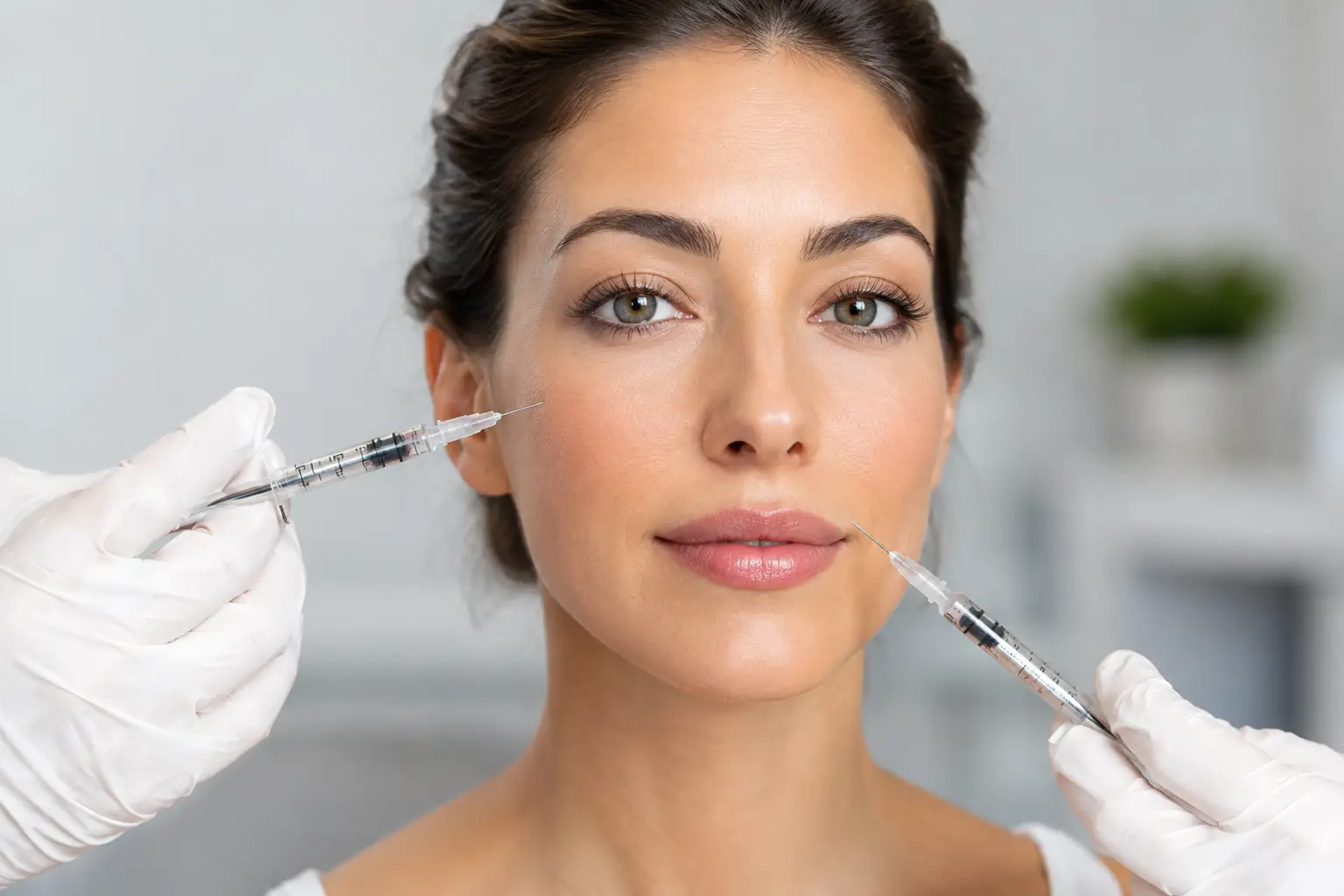
A smoother forehead, softer smile lines or more balanced facial contours can all make a meaningful difference to how refreshed you feel. But anti-wrinkle treatment versus dermal fillers is not a simple choice between two versions of the same treatment. They work in completely different ways, address different signs of ageing and can create very different results when selected well.
The best treatment is never simply the most popular one. It is the option that respects your facial movement, proportions, skin quality and personal goals. A careful consultation is where this begins: understanding what is changing, what you would like to improve and how to achieve a natural-looking result that still feels like you.
Anti-wrinkle treatment versus dermal fillers: the key difference
Anti-wrinkle treatment uses a prescription-only medicine, given only after a face-to-face consultation with a qualified prescriber. It works by temporarily relaxing selected facial muscles. When those muscles move less strongly, the skin above them has a chance to look smoother and more rested. Anti-wrinkle treatment is most commonly used for expression lines, including forehead lines, frown lines between the eyebrows and crow’s feet around the eyes.
Dermal fillers do not relax muscles. Most modern fillers are made from hyaluronic acid, a substance found naturally in the body that attracts water. They are carefully placed beneath the skin to restore volume, refine contours, improve symmetry or soften static lines – the lines that remain visible even when your face is at rest.
Put simply, anti-wrinkle treatment treats movement. Dermal fillers treat volume, structure and shape. Many patients benefit from one treatment alone, while others achieve their most balanced result by combining both in a tailored plan.
When anti-wrinkle treatment may be the better choice
If a line appears mainly when you smile, frown, squint or raise your eyebrows, anti-wrinkle treatment may be the more appropriate treatment. Repeated movement gradually folds the skin in the same areas, which is why dynamic lines can become more noticeable over time.
A precise treatment can soften these expressions without making the face look frozen. The aim is not to remove personality or prevent every movement. It is to reduce the pull of specific muscles so you look rested, calm and naturally refreshed.
Anti-wrinkle treatment is also often chosen as a preventative treatment by patients who are beginning to notice fine lines settling into the skin. It can help slow the deepening of expression lines, although it cannot replace lost facial volume or fill folds that are already present at rest.
Treatment itself is quick, usually taking around 15 to 30 minutes after your consultation. Results typically begin to appear within a few days and develop fully at around two weeks. For most people, the effect lasts approximately three to four months, although metabolism, muscle strength and treatment area all play a part.
When dermal fillers may be the better choice
Dermal fillers are often suited to concerns caused by volume loss, facial asymmetry or changes in contour. As we age, the face does not simply develop lines. It can also lose support through the cheeks, temples and mid-face, which may make the lower face appear heavier or folds around the mouth look deeper.
Strategically placed filler can restore a more youthful framework rather than chasing every individual line. Depending on your goals, treatment may enhance the lips, define the chin or jawline, support the cheeks, soften nasolabial folds or improve the appearance of hollow under-eye areas where suitable.
Results are usually visible immediately, although mild swelling can temporarily affect the final look in the first few days. Longevity varies substantially by product and area. Lip filler may last around six to nine months, while filler placed in more structural areas such as the cheeks or jawline can last 12 to 18 months or sometimes longer.
More filler is not necessarily better. The most elegant results tend to come from thoughtful placement, conservative quantities and a plan that considers the entire face. A treatment should enhance your features, not make you look overfilled or unlike yourself.
Can anti-wrinkle treatment and filler be used together?
Yes. Anti-wrinkle treatment and dermal fillers are frequently combined because they solve different problems. For example, someone may use anti-wrinkle treatment to soften frown lines while using filler to restore cheek support or create subtle lip definition. Treating both muscle activity and volume loss can produce a more harmonious result than focusing on one concern in isolation.
There are occasions when relaxing a muscle first is the right approach before assessing whether filler is needed. In other cases, restoring support in the mid-face can reduce the need to place filler directly into a fold. This is why an experienced clinician looks beyond the line or area that first catches your eye.
At Lotus Dental and Aesthetics Clinic, facial aesthetic treatment is planned around proportion, comfort and a result that complements your natural features. The focus is on refined enhancement, with a clear discussion of what is achievable before any treatment begins.
Choosing treatment by concern
It helps to think about when you see the concern. If forehead lines disappear when your forehead is relaxed, anti-wrinkle treatment is often the logical first option. If a line is visible while your face is still, filler may be more relevant, although skin treatments or a combination approach may also be recommended.
For thin or poorly defined lips, dermal filler is generally used to add hydration, definition or gentle volume. Anti-wrinkle treatment is not a lip-volumising treatment, though very small, specialist doses can sometimes be used around the mouth for particular movement-related concerns.
For a square jaw caused by strong chewing muscles, anti-wrinkle treatment may help slim the lower face over time by relaxing the masseter muscles. For a weak chin or a jawline lacking definition because of structure or volume, filler may be the more suitable choice. These distinctions matter. Treating the wrong cause will not deliver the result you want.
Safety, comfort and realistic expectations
Both anti-wrinkle treatment and dermal fillers should be administered only after a proper medical consultation. Your clinician should ask about your medical history, medications, allergies, previous aesthetic treatment and any factors that may make treatment unsuitable. Pregnancy and breastfeeding are generally reasons to postpone injectable aesthetic treatments.
Temporary redness, tenderness, swelling or small bruises can occur with either treatment. Anti-wrinkle treatment can occasionally cause asymmetry or temporary eyelid heaviness if it is not placed appropriately. Filler carries different risks, including lumps, migration and, in rare cases, accidental injection into a blood vessel. This is an urgent complication, which is why facial anatomy, clinical training, product choice and aftercare matter so much.
For hyaluronic acid filler, an important reassurance is that it can usually be dissolved if needed. That does not mean it should be treated casually. Reversibility is helpful, but the safest approach remains careful assessment and conservative, skilled treatment from the outset.
Avoid booking based on price alone. A very low-cost injectable appointment may not include the time, quality products, emergency protocols or expertise needed for safe, personalised care. You are trusting someone with your face, so ask who will carry out the treatment, how they assess suitability and what support is available afterwards.
How to make the right decision
Bring a clear but flexible idea of what you would like to improve. Photographs from a few years ago can be useful, not because the goal is to recreate a younger face, but because they can show the features and proportions you naturally had. Be open about whether you want a barely-there refresh or a more noticeable enhancement.
A good consultation may lead to anti-wrinkle treatment, filler, a combination of treatments or a recommendation to wait. Sometimes skin quality, dehydration, pigmentation or laxity is the real issue, and injectables alone will not provide the best answer. Advanced skin treatments may be a more appropriate starting point, or a valuable complement to injectable treatment.
The most flattering result is rarely about looking different. It is about seeing a fresher, more confident version of yourself in the mirror. Choose a clinician who listens carefully, explains the trade-offs honestly and creates a plan that feels right for your face and your future goals.
Talk to the team at Lotus Clinic, Golders Green
See our page on facial aesthetics at Lotus Clinic for prices and who will treat you, or book a consultation at 943 Finchley Road, London NW11 7PE. Free parking on our driveway.


