943 Finchley Rd, London NW11 7PE


Invisalign vs Braces: Which Suits You?
Choosing between Invisalign vs braces often comes down to one question: do you want the most discreet option, or the most fixed and predictable one? Both can create a straighter, healthier smile, but they fit very differently into adult life. For busy London patients balancing work, social plans and confidence, the right choice is not just about straight teeth. It is about comfort, visibility, flexibility and how smoothly treatment fits around your routine.
Invisalign vs braces: what is the real difference?
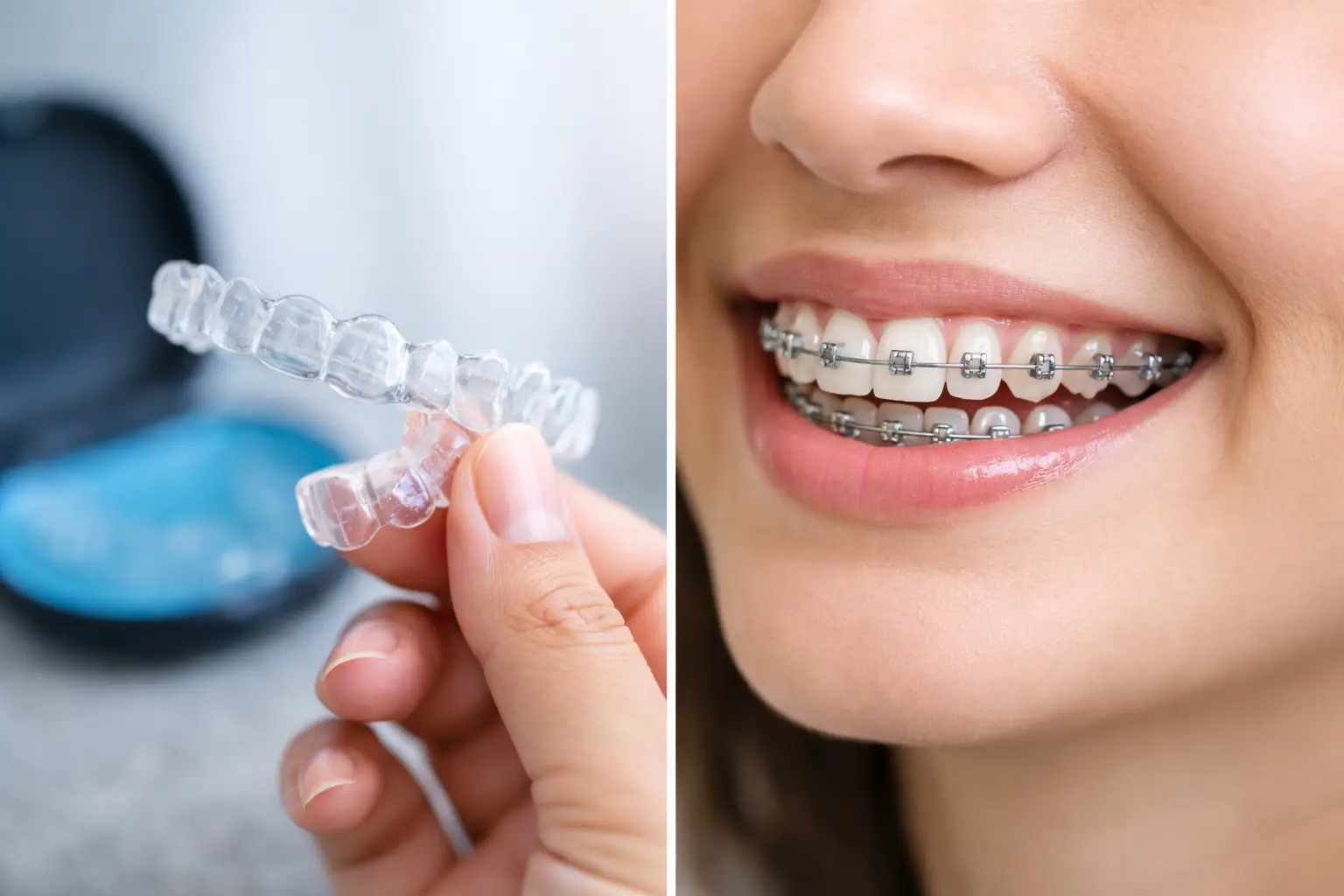
At a glance, Invisalign uses a series of clear, removable aligners to move teeth gradually. Braces use brackets and wires fixed to the teeth, with regular adjustments to guide movement over time. Both are established orthodontic treatments, and both can deliver excellent results when planned properly.
The difference is less about whether they work and more about how they work in daily life. Invisalign is popular with adults because it is subtle and easy to remove for meals, meetings and special occasions. Braces remain a highly effective option, particularly for more complex tooth movement, because they are attached to the teeth and work continuously without relying on patient compliance.
That last point matters more than many people realise. Invisalign only works well if it is worn for the recommended number of hours each day. If aligners are left out too often, treatment can slow down or become less predictable. Braces remove that variable, which is one reason they are still recommended in certain cases.
Appearance and confidence during treatment
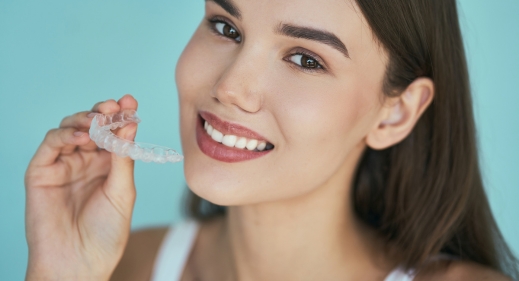
For many adults, this is the deciding factor. Invisalign aligners are clear and sit closely over the teeth, so they are far less noticeable than traditional braces. If you speak to clients all day, attend events or simply feel self-conscious about visible orthodontics, that discretion can be a major advantage.
Braces are more obvious, even with smaller modern brackets. Some patients are completely comfortable with that. Others find it affects how confidently they smile in photographs or in professional settings. There is no right emotional response here – it depends on your priorities and how important a low-profile treatment feels to you.
If appearance is high on your list, Invisalign usually wins. If your focus is purely on the mechanics of tooth straightening and you do not mind fixed appliances, braces may feel like a very practical choice.
Comfort, eating and everyday convenience
Neither option is completely free of discomfort. Teeth need pressure to move, so some soreness is normal, especially after switching to a new aligner or having braces adjusted. The experience is slightly different, though.
Invisalign tends to feel smoother because there are no metal brackets or wires rubbing against the cheeks and lips. Many patients find this more comfortable overall. Braces can cause irritation, particularly in the early stages, although this usually settles as the mouth adapts.
Eating is another big distinction. Invisalign aligners are removed for meals, so there are no food restrictions while you are eating. You can still enjoy crunchy, chewy or sticky foods because the aligners come out first. With braces, certain foods can damage brackets or wires, so patients are usually advised to avoid harder and stickier items.
That said, the freedom of removable aligners comes with responsibility. You need to take them out, keep them safe, clean your teeth before putting them back in and wear them consistently. Some people love that flexibility. Others would rather not think about it and prefer braces because they are always on.
Which is faster: Invisalign or braces?
This is where expectations need to be realistic. There is no universal winner. Treatment time depends on how crowded, spaced or misaligned the teeth are, how the bite fits together and how well instructions are followed.
For mild to moderate cases, Invisalign can be impressively efficient. Digital treatment planning also gives patients a clearer idea of how tooth movement is expected to progress. For more complex cases, braces may offer better control and sometimes a more reliable route to the final result.
It is also worth saying that faster is not always better if the plan is not right. The goal is not simply to straighten the front teeth quickly. A good orthodontic result should also support bite function, stability and long-term oral health.
Invisalign vs braces for complex cases
Braces have traditionally been the go-to option for more complicated orthodontic problems, including significant crowding, larger bite issues and certain tooth movements that require very precise control. That is still true in many cases.
However, Invisalign has evolved considerably and can now treat a much wider range of issues than many people assume. With careful planning, attachments and advanced digital workflows, clear aligners can achieve excellent results for many adults who might once have been told they needed fixed braces.
This is where personalised assessment becomes essential. Two patients can both say they have crooked teeth, yet one may be a straightforward aligner case while the other needs fixed appliances for the best outcome. The visible problem is not always the full picture.
Cost and value
Patients often ask which option is cheaper. The honest answer is that costs vary according to complexity, treatment length and the level of planning involved. Invisalign is often perceived as the premium option because of its aesthetics and custom-made aligners, but braces are not automatically low-cost, especially in more involved cases.
A better question is which option gives you the best value for your goals. If being able to straighten your teeth discreetly helps you feel comfortable enough to start treatment now, Invisalign may be worth the investment. If your case is complex and braces offer the most dependable route to an outstanding result, that may represent better value in the long run.
Flexible finance can also make both options more accessible, allowing patients to focus on the right clinical choice rather than only the upfront figure.
Hygiene and oral health during treatment
Keeping teeth clean is crucial with either option, but the day-to-day routine differs. Invisalign aligners are removable, which means you can brush and floss much as normal before putting them back in. For many adults, this makes oral hygiene easier to manage.
Braces require more effort because plaque can collect around brackets and wires. Cleaning thoroughly takes longer and demands more care. It is absolutely manageable, but patients do need to be committed.
This matters because straightening teeth should support oral health, not compromise it. Teeth that are easier to clean can reduce the risk of plaque build-up, inflamed gums and decay over time. For some patients, especially those who already find flossing difficult, removable aligners can be a real advantage.
Lifestyle, discipline and the best fit for you
One of the most overlooked parts of the Invisalign vs braces decision is personality. Invisalign suits patients who are organised, motivated and prepared to wear aligners as instructed every day. If you are likely to leave them out for long lunches, nights out or busy mornings, you may not get the smooth progress you want.
Braces suit patients who want a fixed solution that keeps working in the background. There is less room for inconsistency because you cannot take them off. For teenagers, or adults with hectic schedules who know they prefer a treatment they do not have to manage actively, that can be a genuine benefit.
There is also the question of appointments. Both treatments require review visits, but the style of treatment monitoring differs. With modern digital planning and a patient-centred approach, orthodontic care can feel much more streamlined than people expect, particularly in a high-tech clinic environment focused on comfort and efficiency.
How to choose between Invisalign and braces
The best choice is the one that balances clinical suitability with real life. If you want discreet treatment, easier cleaning and the freedom to remove your appliance for eating, Invisalign may be ideal. If your case is more complex, or you want a fixed option that does not depend on daily discipline, braces may be the stronger choice.
For many adults, the decision becomes clearer after a proper consultation with digital assessment. Seeing how your teeth and bite actually sit, rather than guessing from the mirror, changes the conversation. It turns a vague cosmetic question into a precise treatment plan.
At Lotus Dental and Aesthetics Clinic, that kind of planning matters because a straighter smile is not only about alignment. It is about confidence, comfort, facial harmony and choosing a treatment experience that feels calm, modern and tailored to you.
If you are weighing up Invisalign and braces, do not ask which is better in general. Ask which is better for your teeth, your lifestyle and the result you want to see when you smile without thinking about it.
Talk to the team at Lotus Clinic, Golders Green
See our page on Invisalign at Lotus Clinic for prices and who will treat you, or book a consultation at 943 Finchley Road, London NW11 7PE. Free parking on our driveway.